
The Cannes Lions International Festival of Creativity was held from June 16 to 20 in Cannes, France. How did the world’s largest festival of creativity appear to its participants? Let’s explore the “here and now” of Cannes from different perspectives.

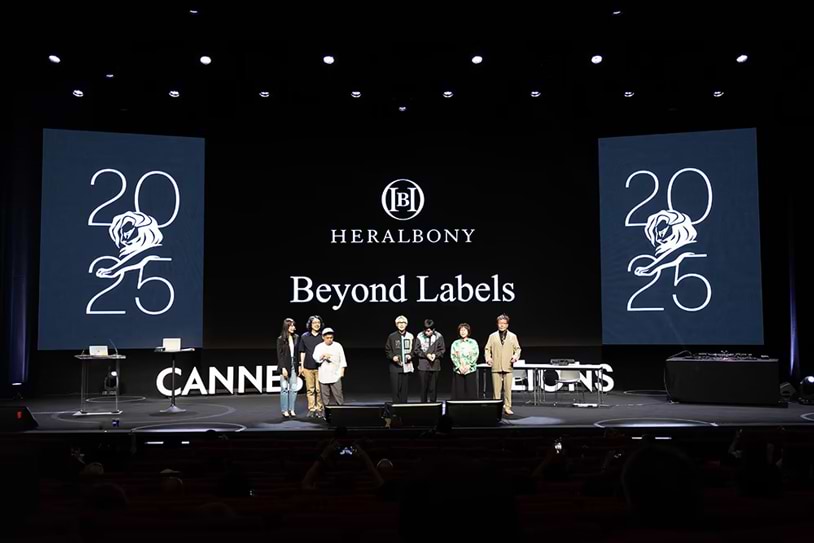
In this report, we cover a seminar hosted by Dentsu on-site at Cannes. Speaking were Dentsu Inc. Creative Director Kinami Hasegawa and HERALBONY Co-CEO Takaya Matsuda. So how are Dentsu and HERALBONY seeking to change society’s perceptions of disability? And what is the creative power that serves as the key?
Harnessing creative power to change societal views of disability
“Should we really regard people with disabilities as ‘unfortunate’ or ‘someone to be pitied’? That is something we want to change using the power of creativity.”
Dentsu Inc. Creative Director Kinami Hasegawa shared this striking statement at the kick-off to the seminar, noting that she had first heard it from twin brothers Takaya and Fumito Matsuda, co-CEOs of HERALBONY, when they met in 2019. She related how at that moment, something changed within her.
“They gave me an item featuring a piece of art. It was a wonderful work created by an artist with intellectual disabilities and a product of the brand they had just launched called HERALBONY. That encounter not only changed my perspective on ‘disability’ and my way of thinking about ‘creativity,’ it also transformed how I relate to my cousin, who is someone with a disability.”
Hasegawa and HERALBONY launched their collaboration in 2021, and last year, Dentsu and HERALBONY launched “Future Creative Partnership.” Through their joint activities, they are seeking to change the way society views disability.
In Japan, there are people with intellectual disabilities who create powerful and deeply moving artworks. However, most of these works are provided almost for free, in exchange for donations. Notwithstanding the high quality of these works, the reality is that it is difficult for the artists to make a living from their art.
It is in response to this situation that HERALBONY continues with efforts to take on an unprecedented challenge. The works of the artists contracted with HERALBONY frequently feature recurring patterns and designs. Building on this characteristic, HERALBONY has developed various fashion items such as scarves and dresses, as well as lifestyle products. The designs have also been expanded for use in hotel interiors, airline amenities, and collaborations with other companies.
HERALBONY’s initiatives have become a global topic of discussion and have garnered significant attention. As a “business capable of becoming a presence in all spaces of society and daily life,” the brand has grown substantially over the course of six years. Through HERALBONY’s efforts, artist income has increased 25.5-fold, reaching a level that can viably sustain their livelihoods.
“Hope Creativity”
Through her work with HERALBONY, Hasegawa came to recognize something important.
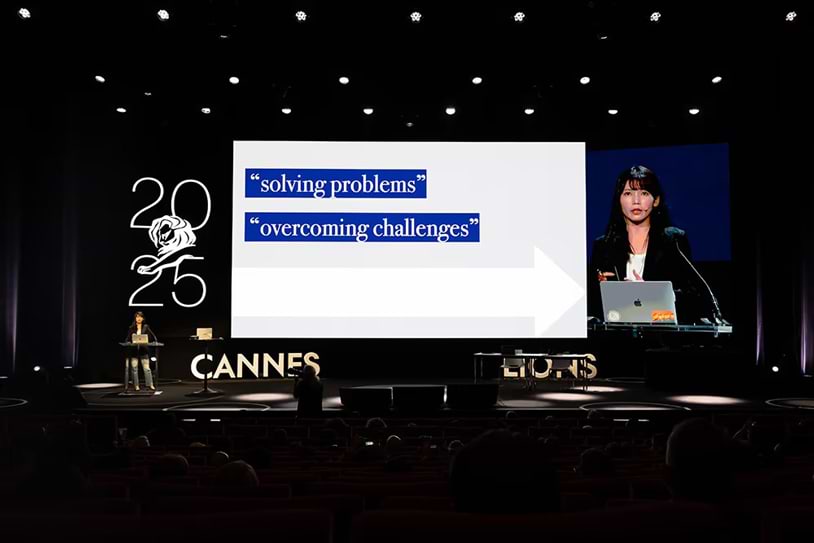
“Before, when we spoke of the relationship between ‘disability’ and creativity, the focus was on “solving problems” or “overcoming difficulties.’ Of course, these are important things to consider. But I believe that creativity has even greater potential. Harnessing the power of creativity to highlight the ‘potential’ and ‘hope’ of people with disabilities—that is what we are aiming to realize.”
To illustrate this comment, Hasegawa introduced some of Dentsu’s representative initiatives.
“Tax returns that give you goosebumps”
When the parents of an artist contracted with HERALBONY reported that their son's artwork-related income had increased to the point where they now needed to file a tax return, Dentsu launched a campaign with the title “Tax returns that give you goosebumps.” They created posters positioning images of tax return documents on the left side and heartwarming stories from the artist’s family on the right, and posted them in three locations inside Tokyo Metro stations, including near Exit A13 of Chiyoda Line Kasumigaseki Station, which connects to the National Tax Agency.
“Makeup lessons without a mirror”
Co-created by Pola, which promotes beauty through cosmetics; Dialogue Japan Society, which provides social entertainment programs; and Dentsu, this program is designed for people with visual disabilities. Participants rely on their sense of touch to care for their skin, apply color, and express their individuality through makeup. This initiative transcends the boundary between those with and without disabilities, delivering beauty, confidence, and joy in everyday life. As such it is an excellent example of how “creativity enriches people’s lives.”
“Visiongram”
This project visualizes how people with visual impairments “see the world.” Based on disability test examination data, personalized filters are developed that represent each individual’s unique “way of seeing.” This enables others to experience how people with visual impairments see, while simultaneously helping the individuals themselves to communicate to others “this is how I see the world.” By sharing this “world of ways to see things,” which can be difficult for those with disabilities to explain and impossible even for parents to imagine, empathy is generated, leading to the realization of a truly inclusive society. This is an example of how “creativity brings people together.”
These examples symbolize what Hasegawa calls a new approach: “HOPE CREATIVITY”—a form of creativity that highlights the “possibilities,” “hope,” and “joy” of people with disabilities.
Creating a world where people with disabilities are truly valued and respected
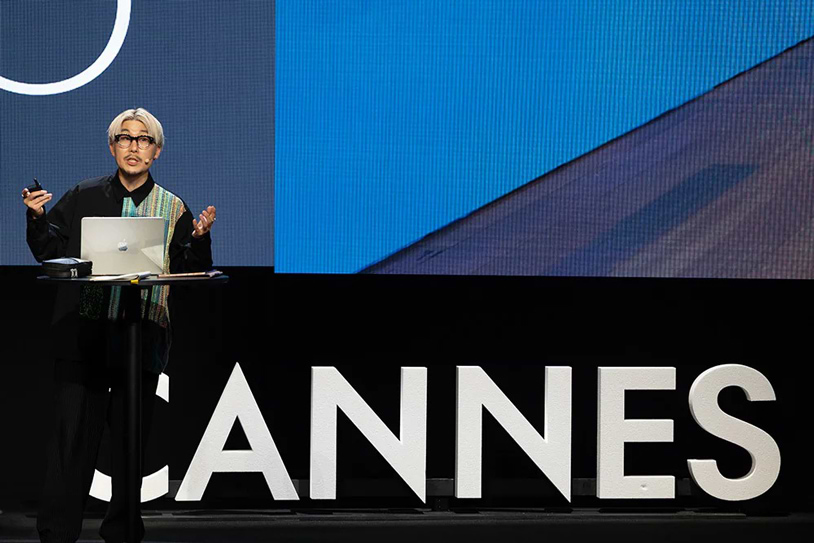
Taking the stage next was HERALBONY’s co-CEO Takuya Matsuda, who spoke about the company’s purpose in this way.
“HERALBONY is a creative company based in Japan and France. We develop the exceptional creativity of artists with intellectual disabilities into various forms of communication.”
“HERALBONY does not engage in “charitable activities,” we are a sustainable business. We want to change the social structures that tend to see people with disabilities only as persons in need of support.”
Matsuda explained that his motivation for founding HERALBONY stemmed from his own brother, who has intellectual disabilities.
“He laughs. He gets sad. He gets angry, and he has real emotions. But even then there were so many people who thought he was someone to be pitied.”
“My mission is to create a world where people with disabilities are truly valued and respected.”
“We take their unique art and develop it into various products, everything from bags to socks, shirts, and more. We are expanding shops and galleries throughout Japan and France. The most important thing is that these things can be seen as simply ‘beautiful’ and ‘cool’.”
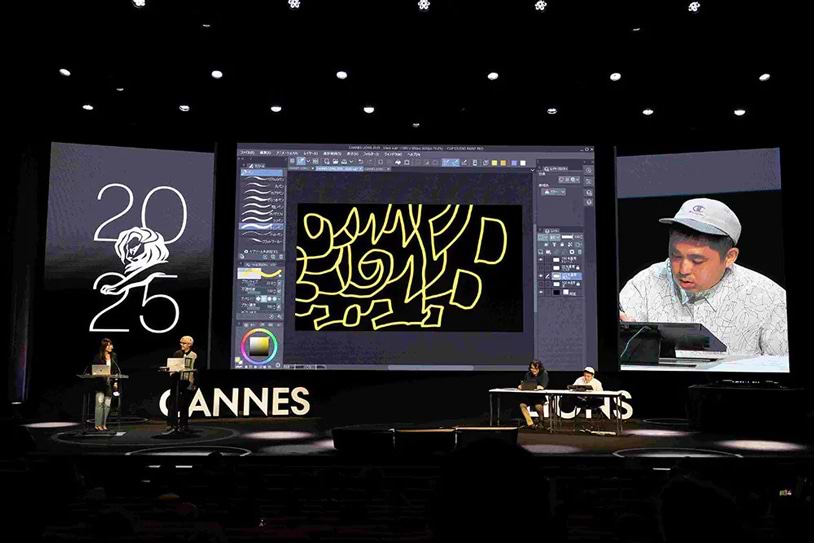
HERALBONY has implemented numerous projects with many companies. By mediating access to a data collection of over 2,000 artworks to partner companies, licensing fees are paid to the artists.
“The artists are front and center of our business. Their creativity contributes to society through expression and enables them to earn proper income.”
“One artist paints nothing but black circles. Another artist endlessly depicts the concept of a maze.”
“One artist is very particular about using every color in equal amounts. Another artist repeatedly paints nothing but female figures.”
“Intellectual disability can become the brush for ‘expression that only that person can create.’ In other words, it becomes a means of generating creativity that is full of individuality.”
HERALBONY’s activities are having a tremendous impact on society. Some artists have seen their income increase 300-fold over the past decade. Parents whose initial reaction was that, “this is just scribbling,” now express their own joy saying, “we are proud of our child.”
Last year, HERALBONY launched the international art award HERALBONY Art Prize. The judging panel includes art experts from diverse backgrounds. This year, 2,650 submissions were received from 65 countries and regions.
In recognition of its efforts in the area of art by people with disabilities, last year HERALBONY received the “LVMH Innovation Award,” the first time ever for a Japanese startup to receive the honor.
As Future Creative Partners, Dentsu and HERALBONY will continue their challenge to create diverse futures through the power of HOPE CREATIVITY. Positioning “disability” as a central theme, together they will open up new possibilities through creativity while collaborating with various partners around the world.
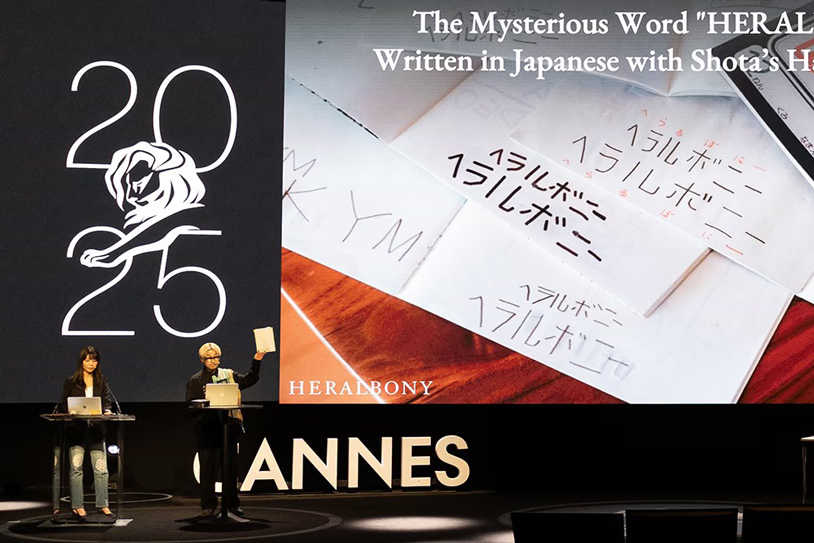
In closing, Matsuda had the following to say about the origins of the HERALBONY brand name.
“The brand name HERALBON comes from my brother. My brother has an intellectual disability and he kept writing ‘HERALBONY’ over and over in a notebook. When I asked him ‘What does this word mean?’ he answered: ‘I don’t know!’”
“A word created in this way by my brother has now become a word that appears in internet searches around the world. Growing up with an older brother with intellectual disabilities, I was often teased and looked down upon. It is precisely because my older brother Shota existed that we twin brothers were able to grow into people who look down on no one.”
“Today, the true founder of HERALBONY, my brother Shota, is here with us!”
Surrounded by waves of applause from the audience, Shota Matsuda took the stage and concluded the seminar by shouting out a message that symbolizes HERALBONY’s identity:
“HERALBONY, BEYOND LABELS !!!!!!”
| * | All information displayed is from the time of the seminar at Cannes Lions. |


