
The De Owarasenai Project (In English, de owarasenai roughly means “it doesn’t end here.”) is an upcycling platform that addresses societal issues. The project aims to help mitigate environmental impacts by creatively reusing items no longer used in corporate activities, while also raising awareness of, and promoting, diversity, equity and inclusion (DEI).
We have run the project twice since launching it in March 2022. Through it we have proposed methods for implementing sustainability activities that can be easily undertaken by even urban and non-manufacturing companies.
What kind of business and societal issues will the project help solve and what has been learned from it? Project promoters Mihoko Hotta of Dentsu Inc. and Hiromi Ogasawara of Dentsu Promotion Plus Inc. discuss these topics.
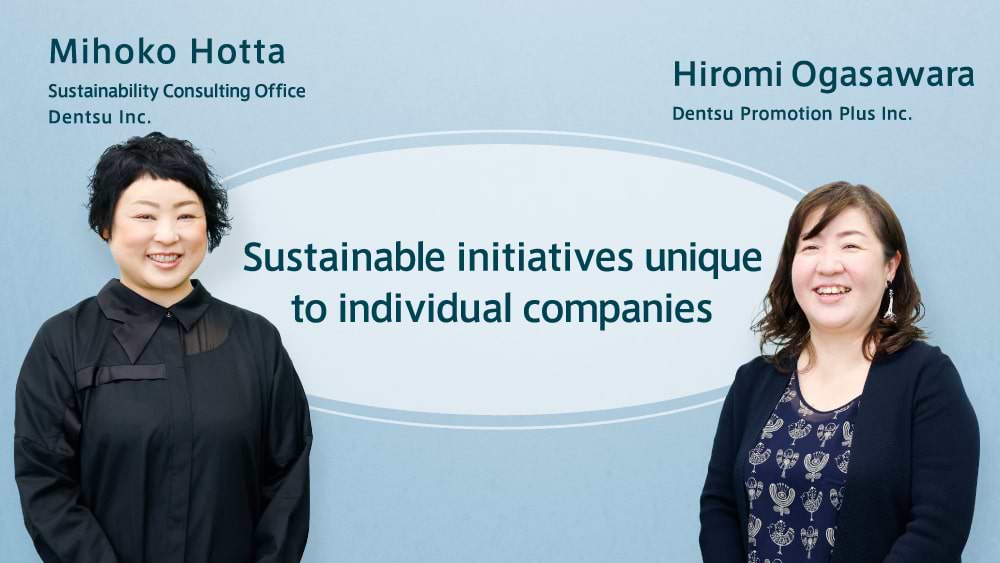
Easily implemented, ongoing activities
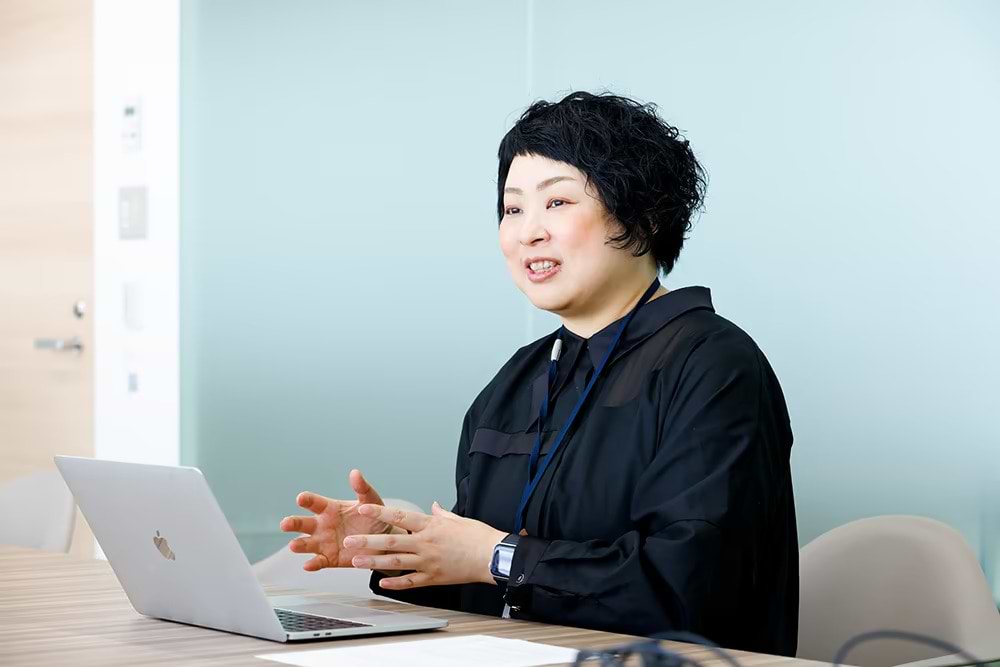
Hotta: My name is Mihoko Hotta and I work at the Dentsu Sustainability Consulting Office. We help companies create sustainable business and run their operations sustainably.
The De Owarasenai Project is an upcycling program launched jointly by dentsu Japan Network and the Dentsu Group companies in Japan. The idea is to address social issues by recycling plastic products no longer being used by businesses and reusing them creatively.
In recent years, companies of all kinds, regardless of industry or sector, are being asked to focus on environmental, social, and corporate governance (ESG). But one of the challenges facing urban, non-manufacturing companies has been the limited number of points they can address, especially in terms of reducing their environmental impact.
Therein lies the impetus for this project. To this end, Dentsu—an urban, non-manufacturing company—made itself a test subject for studying potential systems that could be implemented in daily corporate activities.
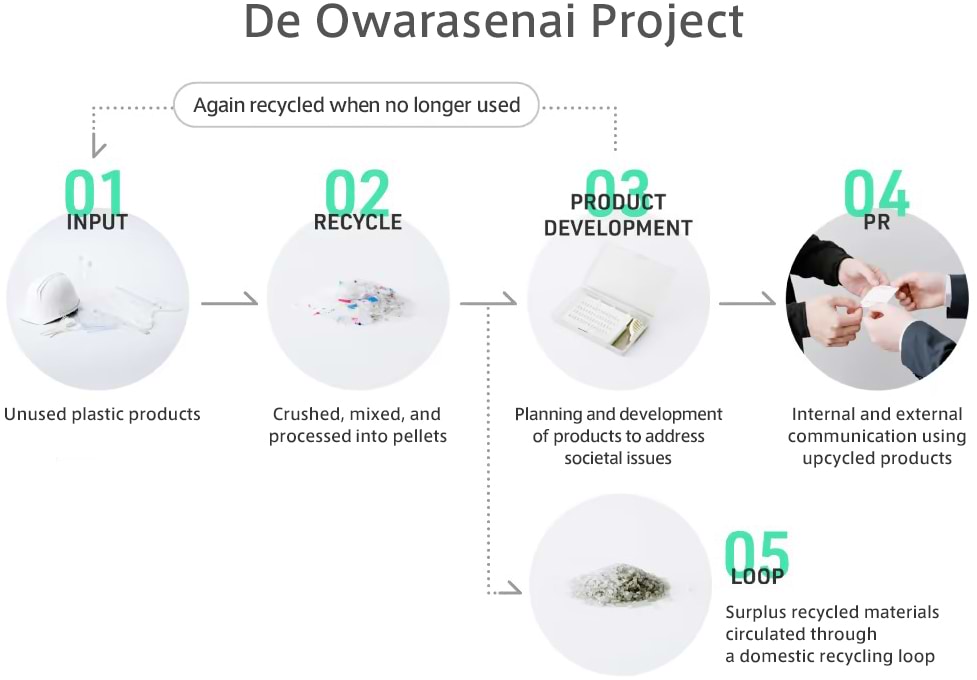
We focused on plastic products no longer being used at offices. These included plastic folders, emergency plastic water bottles, and emergency safety helmets that need to be replaced regularly.
We collected the items and, through the power of ideas, upcycled them, making products that created new value. To do so, we brought in plastic recycling professionals at Pantech Corporation and created a scheme whereby plastic products would be crushed and mixed before being processed into pellets.
In addition, we developed a system to use upcycled products in both internal and external communications, to raise awareness of and promote DEI. In this way, rather than disposing of them, one could circulate surplus recycled materials in domestic markets. We have also created a menu so that other companies can use the system as a platform.
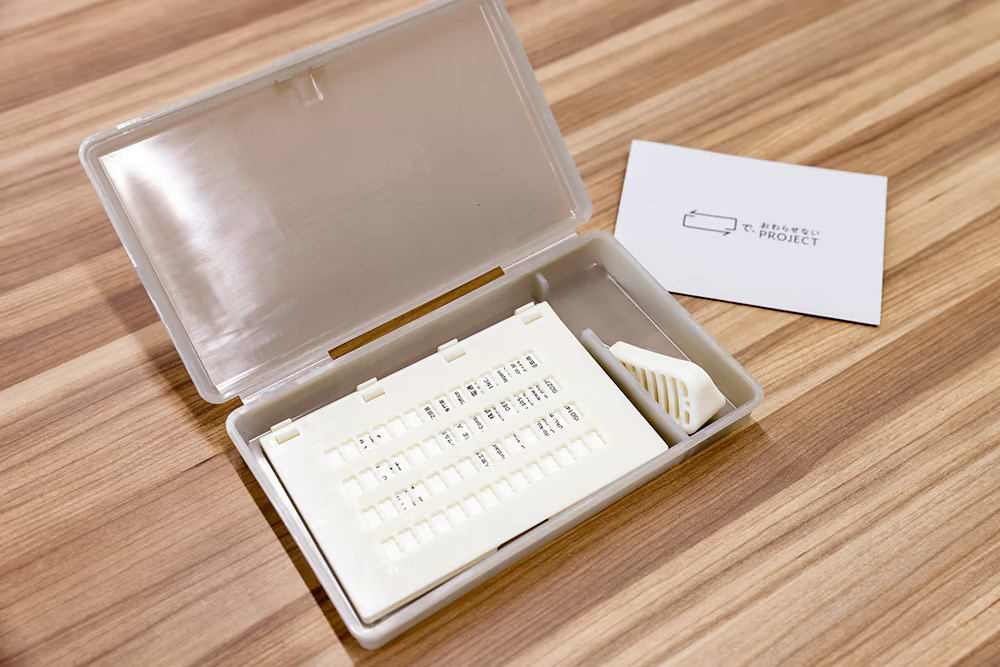
Environment- and DEI-friendly business card Braille device
Hotta: In the first round of the project we developed the Ten-ten convex Braille device for business cards. This makes it easy for anyone to print Braille on their business cards. We developed the devices and styluses from protective helmets that were due for replacement, as well as cases for the cards from disused plastic folders. We also held a workshop on how to create Braille business cards for domestic Dentsu Group employees.
The key point of the initiative is that all employees can easily become involved. In my view, people find it difficult to take ownership of issues just because they are told that we need to recycle. However, if familiar office items, such as plastic folders and helmets are transformed into items that can be printed in Braille, such as the business cards commonly used here in business situations, then upcycling becomes a more familiar story.
Furthermore, do-it-yourself Braille printing is part of the DEI experience, and participating in the seminar raises awareness of DEI. When people use business cards that have Braille, they not only help expand the circle of communication outside their companies, but also raise awareness of, and promote, DEI.
It should be noted that a DEI perspective is included in the upcycling process. Members of Dentsu Solari Inc., a subsidiary that promotes employment for people with disabilities, are involved in collecting the plastic folders.
The first round of the project achieved its two objectives of reducing environmental impact and contributing to DEI. For this it won the Good Design Award in 2022. However, to make sure that the good work doesn’t end here with just this one project, seven domestic Dentsu Group companies already have begun planning a second round of the project.
Lengthy trial and error finally resulted in the Loop+loop polypropylene band kit. We manufactured polypropylene bands from recycled plastic folders, and packaged them as a kit that can be used to make waste baskets, PC cases, shoulder bags and other items. We hope that employees will use the kits, which will enable them to personally take part in the circular resource loop.
In April 2023, the Dentsu Group held a volunteer promotion day: One Day for Change. The theme, both at home and abroad, was the circular economy. Thirty employees took part in the event, which we marked by holding an upcycling event for which the kit was used.
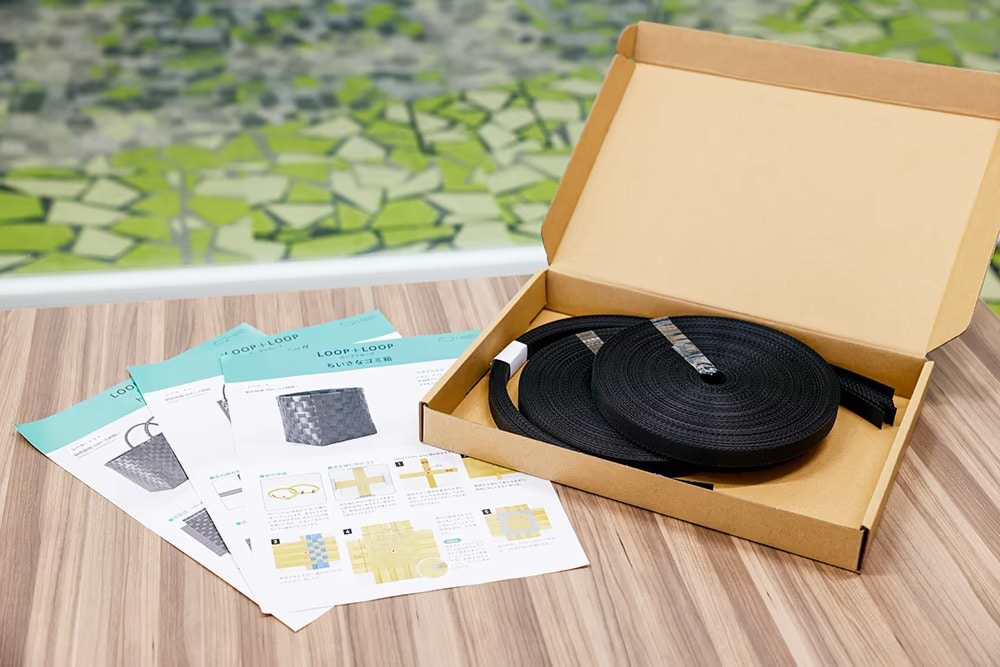
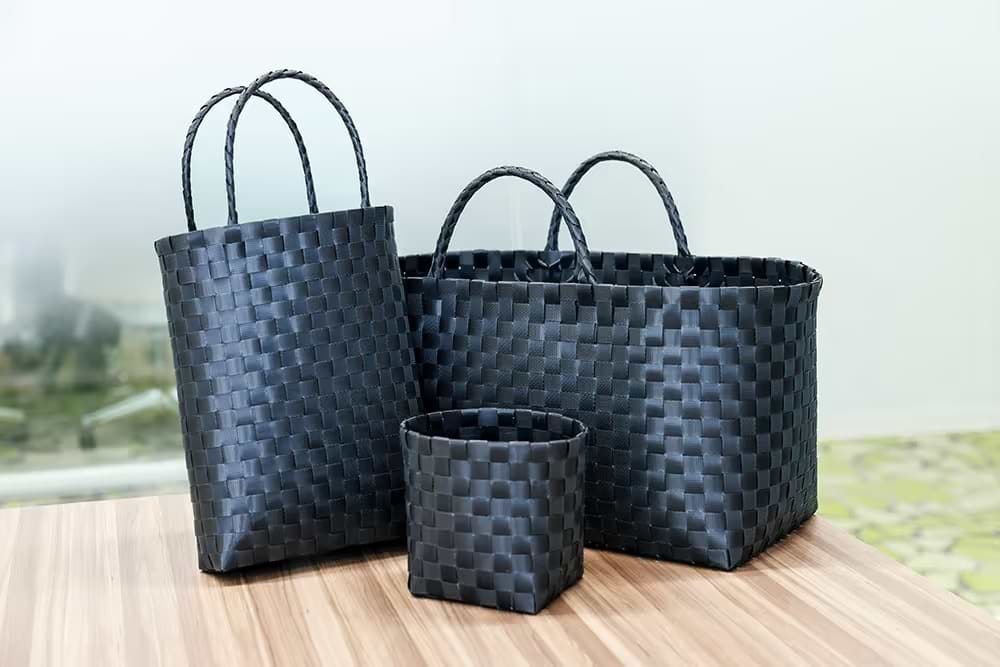
Furthermore, we wanted to take on the challenge of providing ultra-short-time employment for people with disabilities in packing the kits. With just one month to go until the deadline for delivery of the kits, we approached Ogasawara from Dentsu Promotion Plus’s HR department. Knowing it might be a long shot, we nevertheless decided to ask for her help.
ultra-short-time employment: a first for the Group in Japan
Ogasawara: My name is Hiromi Ogasawara and I work at Dentsu Promotion Plus and am happy to describe the ultra-short-time employment initiative for the second-round project. Dentsu Promotion Plus has been involved in this project from the planning stage, leveraging its track record in planning, creativity, and manufacturing as they apply to sales promotion.
The ultra-short-time employment we introduced for the project is a new employment model. It was suggested by Professor Takeo Kondo of the University of Tokyo’s Research Center for Advanced Science and Technology. The model is an effort to build a regional system that matches companies in need of manpower with job seekers looking for very part-time work, thereby benefiting both parties.
The most daunting aspect of introducing such ultra-short-time work was that it was the first such initiative to be implemented by the Dentsu Group in Japan. With no precedent, we had to start from scratch and devise a recruitment process, employment conditions, salary payment methods, and other related matters. We also had to complete recruitment planning, receive internal approval, and finish up the packing of the kits within approximately one month.
As promoting DEI is a socially significant initiative, the plan was promptly approved internally, but actual implementation became a joint effort involving human resources, accounting, and on-site collaboration.
Hence, assuming that assembling 1,000 kits would be completed in five days, we conducted an internal simulation in advance, to enable us to plan how many people would have to be recruited and the number of work shifts required.
With the generous support of our partners at Tokyo’s Minato Ward and the NPO Minato Disability Welfare Foundation, we held information sessions, conducted casual interviews, and quickly selected employees, allowing us to hire the number of people planned.
On the initial day, although one of the workers unexpectedly bowed out, performance exceeded that of our simulation. Thus all the work was finished.
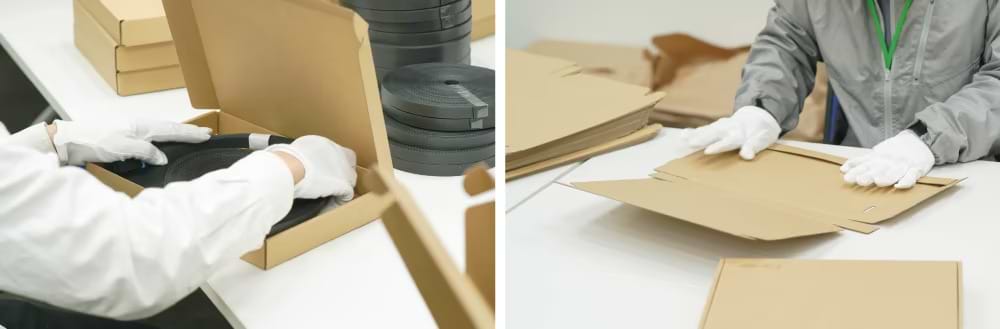
One of the lessons learned from our ultra-short-time employment initiative is that, when planning work procedures and environments, one needs to take into consideration all aspects of disabilities.
For example, it is necessary to provide contract support tailored to the characteristics of individual disabilities, and to have an agent present when a contract is signed. It is also important to adjust the size and font of the print on documents, to make them easier to read, and to minimize the number of items an applicant needs to fill out. Also, since some people are averse to quiet environments, we arranged for music to be played while work was in progress.
Before introducing ultra-short-time work, we were a little worried about how much demand there would be for very short hours. However, we found that our requirements met the needs of people who, finding it hard to work full-time due to individual circumstances, have not had the opportunity to work until now. This also gave us valuable ideas for how we might structure future forms of employment.

A social infrastructure platform used by a variety of stakeholders
By adding ideas while being mindful of the environment, one can create new value. One can also produce a system in which everyone can participate, resulting in a more beneficial cycle. We have now unveiled the third round of the De Owarasenai Project, aimed at further reducing environmental impacts and contributing to DEI.
In closing, we asked Hotta and Ogasawara about the project’s future prospects.
Hotta: I think a major feature of the De Owarasenai Project is that it doesn’t just involve making a product, but also designs experiential value and creates a system that makes it easy for various stakeholders to participate.
In the future, we plan to expand the types of plastic we handle, the form of output, and the diversity of working styles. We would like to develop this into a social infrastructure platform that can be used by a variety of companies and organizations.
Ogasawara: Because much of the work in the Dentsu Group involves product fabrication, we would like to consider adopting employment styles that match the needs of people with disabilities, such as ultra-short-time employment for assembly work.
Currently, companies’ employment rates for people with disabilities are set based on the Act on Promotion of Employment of Persons with Disabilities. But, in the future, I believe it would be ideal to eliminate this promotional framework and create a society in which people who want to work can find employment. Therefore, we would like to continue our DEI efforts so that this initiative, as the name indicates, doesn’t end here (de owarasenai).


